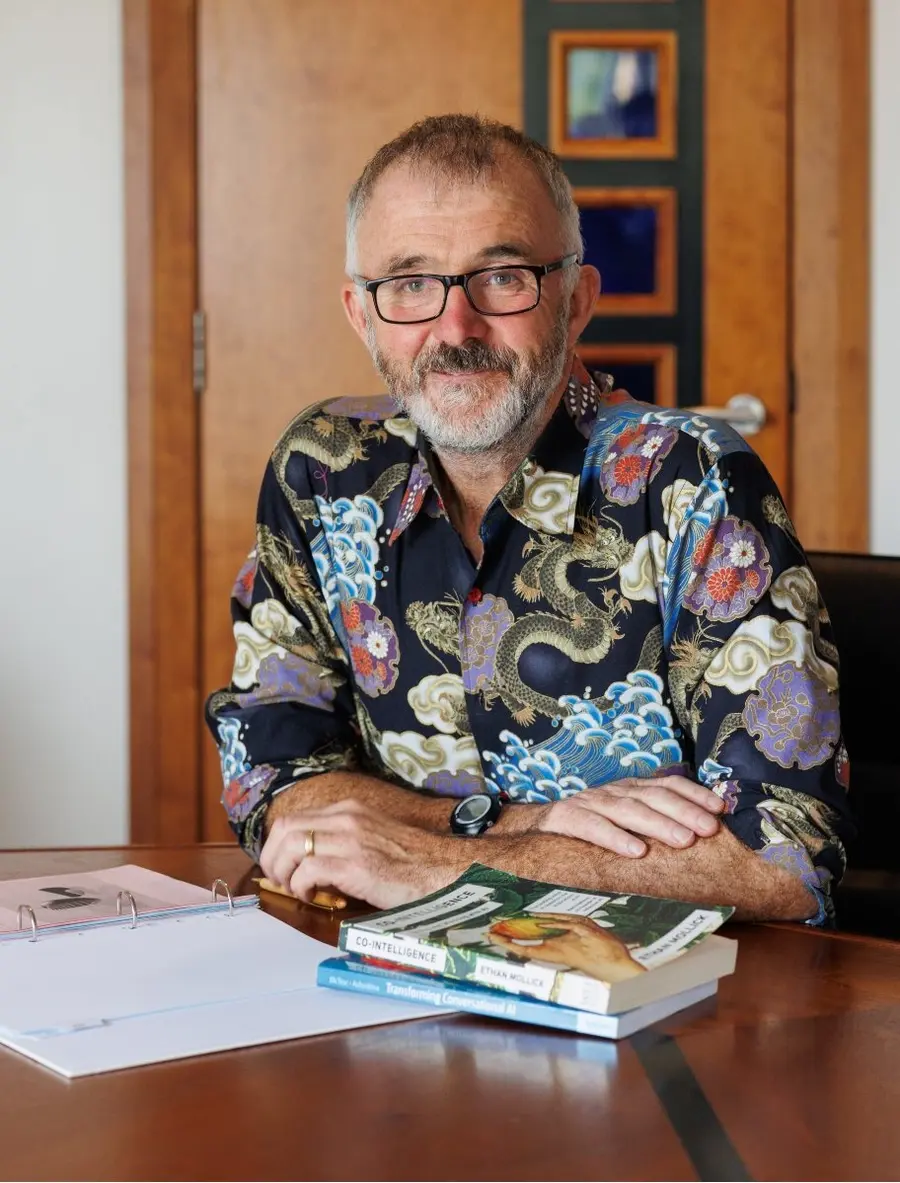

Barry Phillips (CEO) BEM founded Legal Island in 1998. He is a qualified barrister, trainer, coach, and meditator, and a regular speaker here in the UK and Ireland, and abroad.
Barry has completed the Oxford University course “Leading AI Implementation” in June 2026. He has trained hundreds of HR Professionals on how to use GenAI in the workplace and is the author of the book “ChatGPT in HR – A Practical Guide for Employers and HR Professionals”


This week Barry Phillips notes how humans are going to need to become even more human to work best with AI.
Transcript:
And welcome to the weekly podcast that aims to cover in five minutes or less a topical AI issue relevant to the world of HR.
For the past three years, we have been warned that AI is coming for our jobs.
The robots would arrive, sweep through the workplace, and leave half of us updating our LinkedIn profiles from the kitchen table.
Except that is not quite what has happened.
The more interesting story is not that AI has eliminated work. It is that AI is changing what good work looks like, and what employers now need from people.
A Financial Times article from last weekend calls this the rise of “power skills”.
That is a much better term than “soft skills”, which always made empathy and judgement sound like optional extras, somewhere between free fruit and the office Christmas party.
The power skills highlighted in the article are creativity, empathy, judgement and networking. These are becoming more valuable precisely because AI is getting better at the technical and repetitive parts of work.
The article cites PwC research suggesting that job adverts for AI-exposed roles are two and a half times more likely to ask for these human capabilities.
So organisations clearly know that power skills matter.
The problem is that many employers are much better at listing them than developing them.
I think now HR needs to do three things.
First, redesign entry-level roles so that AI accelerates learning rather than replacing it. Let AI simulate difficult conversations, create realistic case studies and provide immediate feedback. But keep human coaching, challenge and accountability.
Second, assess power skills properly.
Do not simply ask candidates whether they are creative team players with excellent judgement.
Nobody has ever answered:
“Actually, I panic under pressure and my judgement gets a bit patchy after lunch.”
Finally, protect the transfer of experience.
Some knowledge can be written down. Much of it cannot.
It passes through observation, challenge, informal conversations and watching an experienced colleague deal with something messy.
Hybrid working makes that transfer more deliberate. It does not make it less important.
The winners in the AI workplace will not be the people who can produce the fastest first draft.
AI has made first drafts cheap.
The winners will be the people who can ask whether the draft is right. Who can spot what is missing. Who can understand who might be affected. Who can challenge the machine with confidence and persuade other humans to act.
Power skills are not the skills left over after AI has completed the important work.
They are the skills that determine whether the work is important, whether it is trusted and whether it is worth doing at all.
The future of work will not belong to humans who try to compete with machines. It will belong to humans who can command them, question them and, when necessary, have the courage to ignore them.
That's it for this week. Thanks for listening and bye for now!
 Get the Most from Copilot (Level 1): A Practical Guide for HR