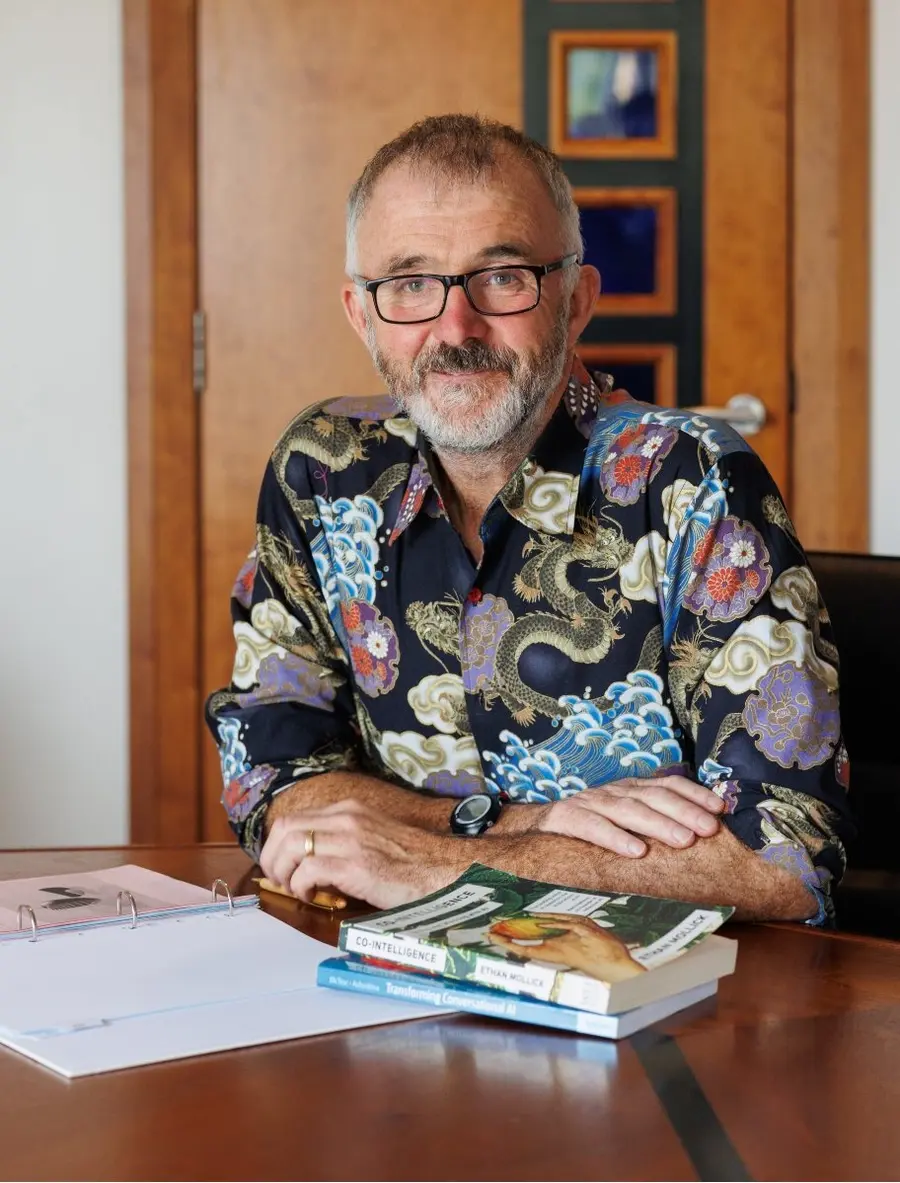

Barry Phillips (CEO) BEM founded Legal Island in 1998. He is a qualified barrister, trainer, coach, and meditator, and a regular speaker here in the UK and Ireland, and abroad.
Barry has completed the Oxford University course “Leading AI Implementation” in June 2026. He has trained hundreds of HR Professionals on how to use GenAI in the workplace and is the author of the book “ChatGPT in HR – A Practical Guide for Employers and HR Professionals”
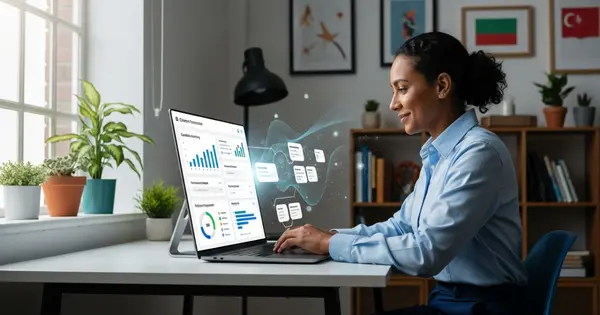

This week Barry Phillips considers the rise of the significance of the AI-enabled HR professional and what it means for the workplace.
Transcript:
Hello Humans!
And welcome to the podcast that summarises an important AI development for HR every week in five minutes or less. I'm Barry Phillips.
Just over a week ago OpenAI released ChatGPT 5.5 and the latest iteration of their image generator. Both are remarkably good, and in the view of many experts, they’re market leaders that push the capability curve sharply upwards yet again.
So it feels like a good moment to talk about the rise of the AI-enabled HR professional.
And by this I mean the HR professional who understands enough about AI to use it well, challenge it properly, and stop it doing something stupid and full out at that.
Because that is where HR is heading.
AI is no longer sitting outside the profession, knocking politely on the door. It is already in the room. It is drafting policies, writing job adverts, summarising employee survey comments, creating learning content, helping managers prepare for difficult conversations, and producing first drafts of communications that used to take hours.
And here is the uncomfortable truth.
HR professionals who learn to use AI well will not just be a little more efficient. They will be operating in a different gear.
Faster. Clearer. Sharper at analysing information. They will spend less time wrestling with blank pages and more time dealing with actual people, which, rumour has it, is supposed to be the point of HR.
The AI-enabled HR professional does three things well.
First, they know where AI helps.
AI is excellent at giving you a starting point. It can structure ideas, summarise long documents, compare options, translate legal language into plain English, and generate scenarios for training. It is brilliant for getting from nothing to something.
And frankly, "something" is often much better than staring at a screen while slowly losing the will to live.
Second, they know where AI does not help.
AI does not understand your workplace culture. It does not know the history behind that grievance. It does not feel the tension in a consultation meeting. It does not see the employee who says, "I'm fine," while clearly being anything but fine.
It can process language. It cannot read the room.
And in HR, reading the room is not a soft skill. It is survival equipment.
Third, they know how to challenge AI.
This is the big one.
They do not accept the first answer because it sounds confident. Confidence is not competence. Any employment lawyer knows that. So does anyone who has ever sat through a management meeting.
They ask: Is it accurate? Is it fair? Is it lawful? Is it biased? Is it right for our organisation? Would I be comfortable defending this in front of an employee, a tribunal, or the Chief Executive on a bad day?
That is the real skill.
Not prompting. Judgement.
Prompting gets you an answer. Judgement tells you whether the answer is any good.
So HR should not fear AI. HR should prepare for it.
We can treat AI as a threat and hope it goes away — a bold strategy, rather like ignoring a fire alarm because the noise is irritating.
Or we can treat it as a powerful tool that needs governance, ethics, training, and common sense.
The future HR professional will be part adviser, part investigator, part risk manager, part communicator, and part professional sceptic. They will know when to speed things up and when to slow things down. They will use AI to remove drudgery, not humanity. And they will remember that efficiency is not the same as wisdom.
The rise of the AI-enabled HR professional is not about humans becoming more like machines. It is about humans becoming more human, because the machine is finally taking some of the mechanical work away.
The future of HR will not belong to those who know the most about AI. It will belong to those who use AI to make better human decisions.
Until next week, bye for now!
 AI Literacy Skills at Work: Safe, Ethical and Effective Use
 Get the Most from Copilot (Level 1): A Practical Guide for HR